
Signs your partner is cheating
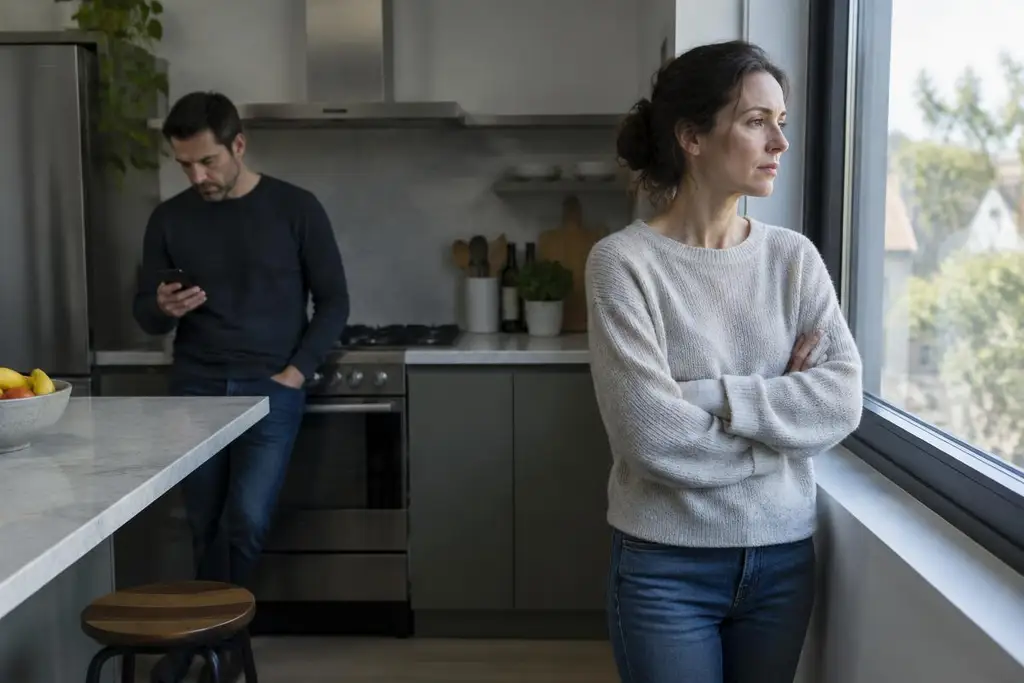
You do not spot cheating from a single sign, but from a pattern of changes: your partner suddenly guards their phone, changes their schedule without explanation, pulls away emotionally and physically, reacts irritably to ordinary questions and their stories keep filling up with inconsistencies. None of these signs alone proves infidelity. Instead of snooping, ask directly and calmly and watch how your partner responds.
Hana (38) noticed Radek had a new password on his phone and found it odd, but not alarming. Then he started going to „meetings“ that ended at ten in the evening, and whenever she asked how it went he answered „the usual“ and went to shower. For three weeks she wrote detective stories in her head and could not sleep. In the end she asked him directly at the kitchen table whether something was going on. Radek was silent for a long time, and then he told her. It hurt like hell, but the uncertainty had hurt more.
Why cheating is so hard to spot
Because most of its signs also have innocent explanations. A partner may guard their phone because they are planning a surprise. They may be distant because work is hell or they are going through depression. They may have new trousers because they finally noticed the old ones stopped fitting in 2019. So do not look for one „proof“, watch the pattern: several changes at once, without explanation, and they last.
10 signs your partner may be cheating
Changes in communication
- The phone as a vault. A new password, the screen always face down, the phone in the bathroom, notifications off. Privacy is normal, a sudden change of behaviour is not.
- Irritability at ordinary questions. „Where were you?“ triggers an argument even when you ask out of curiosity. Defence without attack is a signal.
- Inconsistencies in stories. The colleague they had a beer with knows nothing about it. The meeting ended at six, they got home at ten. The details change depending on who is asking.
- Less sharing. They used to talk about work, friends, plans. Now it is „nothing special“ and that is it.
Changes in behaviour
- A new schedule without explanation. Overtime, weekend events, gym at unusual times. On its own nothing, in combination with the rest worth attention.
- A sudden interest in appearance. New clothes, perfume, diet, the gym. If it never mattered to them and now it does, wonder for whom.
- A change in intimacy. Either a marked drop, or new habits from nowhere. Both can have other causes too.
- Emotional distance. Fewer glances, fewer touches, less „and how are you?“. Physically at home, but with their head elsewhere.
Changes in how they treat you
- Criticism without reason. A new dissatisfaction with how you cook, speak, look. Sometimes people who cheat use it to excuse to themselves what they are doing.
- Accusing you. Paradoxically a common sign: a partner who cheats starts suspecting you. Projection is cheap but effective defence.
What to do about suspicion
1. Do not rush to a conclusion
Write down what you noticed and when. After a few weeks you will see whether it is a pattern or a coincidence painted black by your anxiety. Memory under stress exaggerates, paper does not.
2. Do not snoop
Going through their phone, tracking their location, reading their e-mail. You might find something, but you will lose a piece of your self-respect, and in some cases break the law. And if you find nothing, the suspicion does not go away, you will just think they are cleverer. Snooping is a road where there is no way to win.
3. Ask directly
Calmly, in private, not in the middle of an argument. „Lately I have felt something has changed between us. I noticed X and Y. Is something going on that I should know about?“ Describe what you see, not what you think.
4. Watch the reaction, not just the answer
A calm, concrete answer with an explanation is a good sign. An attack, mockery, „you are paranoid“ or an immediate change of subject are worse. Neither is proof, but both are information.
5. Decide what you need
If the cheating is confirmed, you do not have to know right away whether to stay or leave. Take your time. Both directions are legitimate and both need support. A relationship can recover after infidelity, but only when both want it and the partner takes responsibility. That is a topic for a separate article.
6. Do not go through it alone
Talk to a friend, a sibling, a therapist. Infidelity shakes your self-confidence too, and that needs support from outside. If shared finances or children are involved, also consult a lawyer before you decide.
What cheating does not mean
It does not mean you are not enough. Cheating is a decision made by the person who cheats, and it has its reasons, but the fault is not yours. Even if the relationship had problems, other paths existed: a conversation, therapy, a breakup. Cheating is a choice, not an accident.
Starting again with trust
After infidelity it is hard to trust anyone, including yourself and your own judgement. If, after a while, you go back to dating, it helps to be somewhere where you know where you stand from the start. On lāska.ai everyone states in their profile what kind of relationship they want and whether it is a closed relationship, and the chat only opens after mutual interest is confirmed.
Clear intentions in every profile and a chat after mutual interest. First recommendations for free.

Dr. Lāska
Frequently asked questions
How do I know my partner is cheating?
By a pattern of changes: guarding their phone, changing their schedule, pulling away, reacting irritably and telling stories with inconsistencies. One sign proves nothing, the pattern is what matters.
Should I go through my partner's phone?
No. You damage trust and self-respect and the suspicion does not go away. Instead, ask directly.
How do I ask my partner if they are cheating?
Calmly and in private, describe what you noticed and ask whether something is going on. Avoid accusations and arguing.
Can a partner change their behaviour for reasons other than cheating?
Yes. Stress at work, depression, health problems or a midlife crisis can look similar. That is why a conversation matters more than assumptions.
What should I do if the cheating is confirmed?
Take time to decide, find support and do not make decisions in the first days. If you want to save the relationship, couples therapy helps.
Why does a cheating partner accuse me of cheating?
Often it is projection: they shift their own guilt onto you. It is a defence mechanism, not information about you.
Related articles on the blog
- How to rebuild trust after lying or cheating
- How to handle jealousy in a relationship
- How to survive a breakup, step by step
- Red flags vs. green flags: the complete guide